Impact of medical waste on environment
The environmental impact of medical waste is becoming increasingly important as healthcare facilities produce large quantities of high-risk waste every day and we know more and more about how these types of waste have negative impacts on our overall living environment. Improper collection or disposal can lead to air, soil and water pollution.
Chemical Waste Netherlands advises and supports healthcare providers in environmentally conscious and safe disposal of medical waste from various sectors according to all legal guidelines. On this page, you can read more about the environmental impact of medical waste streams.
How does medical waste burden the environment?
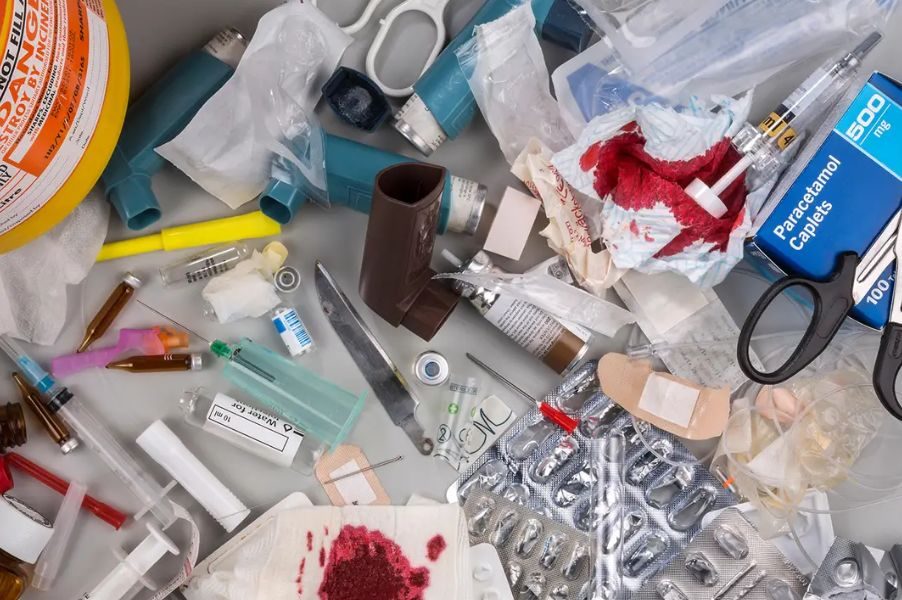
Medical waste can cause harmful effects in the environment due to hazardous substances, micro-organisms, pharmaceutical residues and large waste volumes in the healthcare sector. Improper disposal disrupts ecosystems, affects water quality and increases environmental impact. Responsible waste management is therefore crucial for a sustainable healthcare sector. Chemical Waste Netherlands helps organisations reduce risks with safe collection and certified processing.
Why does medical waste pose a greater risk than regular waste?
Medical waste poses a greater risk that regular waste because medical waste can contain pathogenic organisms, needles, sharps and drug residues. These waste streams are potentially hazardous to humans and the environment and should never end up with regular waste. By choosing safe collection, UN-approved packaging and clear separation, you prevent contamination and environmental damage. Chemisch Afval Nederland advises you on the right approach for your institution.
Environmental consequences of improper collection or disposal of medical waste
Improper collection or treatment of medical waste increases the risk of pollution, emissions and the spread of harmful substances. The impact is often greater than visible - not only locally but also in the wider waste and water chain. This is therefore the reason why legal rules around medical waste are.
Air pollution due to improper combustion
Air pollution from improper incineration occurs when medical waste is processed in facilities that are not suitable for high-risk waste. Harmful emissions such as dioxins and heavy metals can be released, resulting in health and environmental risks.
Soil and water pollution from leakage
Soil and water pollution from leakage occurs when waste is not stored in leak-proof, UN-approved packaging. Drug residues, chemicals and micro-organisms can penetrate groundwater or surface water and permanently disrupt ecosystems.
Spread of pathogens
Spread of pathogens occurs when infectious waste is not properly separated, sealed or stored. This can release bacteria, viruses or other micro-organisms into the environment, with risk to humans, animals and the environment.
Sustainable solutions for reducing environmental impact
Sustainable solutions for reducing environmental impact focus on waste reduction, safe separation, circular processes and efficient processing. Healthcare facilities can thus both reduce environmental damage and meet sustainability goals.
Minimising waste streams
Minimising waste streams starts with conscious use of materials, using reusable medical products and reducing packaging waste. Small process modifications can already yield significant environmental benefits.
Safe and clean processing methods
Safe and clean processing methods such as sterilisation, controlled incineration and recycling contribute to lower emissions and less environmental damage. Chemical Waste Netherlands works exclusively with certified processors that comply with strict sustainable standards.
Recyclable materials within healthcare
Recyclable materials within healthcare, such as polypropylene wrapping paper or metal instrument parts, can be reused after safe treatment. This reduces waste and contributes to circular healthcare.
Circular healthcare and the role of sustainable waste management
Circular healthcare and the role of sustainable waste management are becoming increasingly important as the healthcare sector seeks to reduce its ecological footprint. Closing waste streams and reusing materials creates a sustainable care chain in which raw materials are preserved. Chemical Waste Netherlands supports healthcare institutions in circular processes and ensures that recyclable materials are reused.
Innovations that contribute to lower environmental impact
Innovations that contribute to lower environmental impact come from new techniques and sustainable processes. Think of polypropylene wrapping paper recycling, medical textile reuse and more efficient collection methods with minimal transport movements. Chemical Waste Netherlands assists organisations in implementing these solutions and making their waste streams more sustainable.
Checklist: this is how your organisation reduces its environmental impact
- Clearly map all medical waste streams and volumes
- Use UN-approved packaging to prevent leakage
- Train employees periodically in secure segregation and coding
- Minimise waste through reusable materials and smarter routines
- Opt for circular solutions where possible
- Work with a recognised waste specialist such as Chemical Waste Netherlands
Frequently asked questions on the environmental impact of medical waste
How harmful is medical waste to the environment?
Medical waste is harmful when improperly collected or processed. Harmful substances, medicine residues and pathogens can end up in the air, soil or water. Correct separation and certified processing prevents these risks.
Why should medical waste be collected separately?
Medical waste should be collected separately to prevent contamination and infection. It may contain hazardous substances, infectious material or sharps that are not safe for regular waste management.
Which processing methods are the most environmentally friendly?
Environmentally friendly methods are sterilisation and recycling, when safely applicable. Some waste streams require controlled incineration. Chemisch Afval Nederland advises which route is most sustainable and legally correct.
How can healthcare facilities reduce their waste?
Healthcare facilities reduce their waste by using reusable materials, more efficient practices, good waste management and circular solutions. Conscious procurement also helps reduce medical waste.
What happens to medical waste after collection?
After collection, medical waste is transported and processed according to strict guidelines. Depending on the type of waste, it is sterilised, incinerated or recycled. This processing prevents environmental damage and reduces risks to health and safety.
Reduce the environmental impact of your medical waste
Do you want to reduce the environmental impact of your medical waste streams? Chemical Waste Netherlands supports healthcare institutions with sustainable collection, safe packaging and environmentally conscious processing according to all legal requirements.
Contact us for advice or a customised quotation without obligation.