Key points in this article:
- Waste oil causes serious environmental pollution and economic damage if improperly stored or handled.
- Oil spills and spills cause long-term damage to soil, water, and ecosystems.
- Safe management, storage and transport of oil waste are legal obligations for companies.
- Sustainable recycling of oil waste reduces environmental impact and produces valuable raw materials.
- Chemical Waste Netherlands offers safe collection, processing and advice for legally responsible oil management.
What are the environmental impacts of used oil on soil and water?
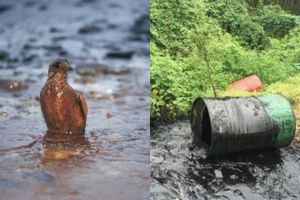
Used oil poses one of the greatest threats to the environment if not managed carefully. Companies that process large amounts of used oil, in particular, must be alert to the potential impact of spills on soil and water. Used oil contains various harmful substances that, once released, not only cause water pollution but can also permanently damage ecosystems. Just one liter of used oil can pollute up to one million liters of water (source: RIVM).
The emission of harmful substances leads to irreversible damage to soil and surface water. Waste oil and water pollution have long-term consequences for nature and public health. Chemical Waste Netherlands helps you with safe solutions to structurally prevent these environmental problems and offers advice on responsible waste collection.
Disposing of used oil: practical tips and legal obligations
Safe and responsible dispose of used oil For companies, waste oil collection is not only a legal obligation but also a sign of professional entrepreneurship. Because used oil is classified as hazardous waste, discharge into sewers, soil, or water is prohibited. You are required to collect used oil and have it disposed of by a certified collector, such as Chemisch Afval Nederland (Chemical Waste Netherlands).
Use suitable storage equipment, such as IBC containers or metal drums, and always place them on a liquid-tight floor. Regularly check that your storage area is leak-proof and provide employees with clear instructions on how to safely handle oil waste. Choose periodic or on-demand collection to minimize risks and comply with all legal requirements. This way, your company remains in full control of the oil waste process.
The role of leaks and dispersal in oil spills
Leaks and spills are the main causes of oil pollution. When used oil is not stored or handled properly, even small spills can have serious consequences. Oil forms a thin, barely visible layer on water surfaces, hindering oxygen exchange and posing a serious threat to aquatic life. Waste oil can penetrate deep into the ground, leading to long-term contamination and the release of toxic substances.
For businesses, this means that any leak, no matter how small, can result in serious environmental damage and high cleanup costs. By using leakproof IBC containers or metal drums, such as those supplied by Chemical Waste Netherlands, you significantly minimize the risk of leaks and their spread. Always have used oil collected and processed by a certified collector to protect your operations and the environment from harmful consequences.
Why responsible waste oil processing is essential
Responsible processing of used oil is absolutely essential for companies, organizations, and freelancers working with oily waste. As discussed earlier, spills and the spread of used oil cause significant environmental damage with economic consequences. Degraded or old oil contains toxic substances that cause long-term soil and water contamination. This not only damages ecosystems but can also lead to high costs for soil remediation or water treatment.
That's why responsible and safe management of used oil is both a legal requirement and economically sound. Clear guidelines have been established for the disposal of oil waste for sectors such as automotive, industrial, and mechanical engineering. By choosing professional collection through Chemical Waste Netherlands, you prevent environmental problems and reputational damage. Our certified storage and transport solutions ensure that oil does not end up in the environment uncontrolled. This way, you comply with the Environmental Management Act and the guidelines from the National Waste Management Plan (LAP3).
Best practices: safe storage and transport of oil waste
For any company that works with oil, best practices for storage and transport are essential. Always choose specially designed storage solutions such as IBC containers and metal drums with leak-proof seals. Chemical Waste Netherlands recommends disposing of used oil directly in approved drums and regularly checking for damage or wear.
- Use liquid-tight floors and drip trays to prevent spills.
- Check all storage tanks and labels periodically (Read more: how to correctly label used oil)
- Train employees in emergency and spill response.
- Have oil waste transported by certified collectors with an ADR permit.
Besides storage, transport plays a major role. Internal movement is preferably done using closed systems, while external transport is only permitted through certified processors such as Chemisch Afval Nederland (Chemical Waste Netherlands). This way, you comply with all legal requirements and protect people and the environment from incidents involving hazardous waste.
Sustainable recycling of oily waste in practice
Sustainable recycling of oil-containing waste is a vital link in limiting environmental damage. In practice, this means that used oil is not discarded, but is responsibly collected, stored, and processed into new raw materials. Chemical Waste Netherlands helps you turn waste oil into a valuable raw material. Used oil contains components that, after filtration and processing, can be re-refined into base oil or used as an alternative fuel. In this way, you actively contribute to the circular economy, reduce the pressure on primary raw materials, and minimize your ecological footprint.
Once your collection facilities are full, our collection service ensures the oil is disposed of and processed in a controlled manner. Thanks to our specialized approach, used oil is converted into valuable products, significantly reducing the environmental impact.